Faculty/Speakers
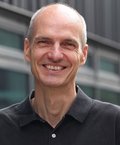
Christoffer Laustsen, DMSc, PhD
Graduated in physics and Nano Science from Aarhus University and received his PhD in medical research from the same university. Professor and head of MR Research at the MR-Research Center, Department of Clinical Medicine, Aarhus University, Denmark.
His main research focus has been on introducing the novel imaging methodology Dynamic Nuclear Polarization for early identification and monitoring of the disease diabetic nephropathy.

Ferdia Gallagher, DMSc, PhD
Professor Ferdia Gallagher is a Cancer Research UK Senior Research Fellow, Head of the Department of Radiology at the University of Cambridge, and an honorary Consultant Radiologist at Addenbrooke’s Hospital in Cambridge.
He leads the Clinical Molecular Imaging Group in the Department of Radiology and the preclinical imaging group in the Anne McLaren Building on the Cambridge Biomedical Campus. He has expertise in metabolic imaging using MRI and PET for stratification of tumours and response to therapy.
The group has a particular interest in understanding the molecular basis of metabolism in a range of cancers, and how novel non-invasive imaging methods to probe this metabolism can be translated into patient studies. The ultimate goal of his work is to develop new imaging biomarkers of early detection and treatment response for patient benefit.
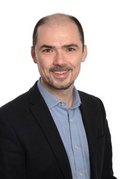
Jeremy W. Gordon, PhD
Received his PhD from the University of Wisconsin-Madison in Medical Physics. He is currently an Associate Professor at the University of California, San Francisco (UCSF).
His research program focuses on the development, optimization, and translation of MRI-based molecular imaging methods to assess metabolism in preclinical models and human subjects, with particular expertise in hyperpolarized 13C MRI.
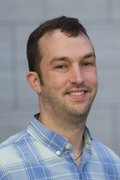
Jim Wild, PhD
Received his PhD in MR spectroscopy from the University of Edinburgh. Professor at the University of Sheffield and head of POLARIS (Pulmonary, Lung and Respiratory Imaging Sheffield).
His research focuses on the physics and engineering and clinical applications of hyperpolarized gas (3He and 129Xe) and proton MRI in the lungs and pulmonary vasculature.

Andrea Capozzi, PhD
Andrea Capozzi graduated in Physics from the University of Pavia and received his PhD in Physics from EPFL, Lausanne. He subsequently held academic positions at the Technical University of Denmark (DTU) and EPFL, where he served as an Assistant Professor and independent junior group leader, respectively.
He is currently Research and Applications Manager at Polarize ApS, where he leads research and application development activities related to dissolution Dynamic Nuclear Polarization (dDNP), including the development and implementation of new hyperpolarization methodologies and their translation into biomedical and preclinical applications.
His research focuses on the fundamental understanding of dDNP, the development of hyperpolarization technologies, and their application to magnetic resonance spectroscopy and imaging.

Arnaud Comment, PhD
PhD in Physics at University of Illinois, Champaign-Urbana, and EPFL. Currently manager of the Hyperpolarized 13C Imaging program at GE HealthCare.
His expertise is in instrumentation and methods for preclinical and clinical hyperpolarized 13C MR.

Myriam Chaumeil, PhD
Myriam Chaumeil is the Head of Research, HP MRI applied science, at NVision Imaging Technologies, as well as Adjunct Full Professor at the University of California San Francisco, and Honorary Full Professor at Ulm University.
She received her PhD in Physics from the University of Paris-Sud. Her expertise is on developing and validating Hyperpolarized 13C-MR based methods for in vivo
10 measurement of brain metabolism, in physiological and pathological conditions, in preclinical models and in patients.
She has experience in studies of glioblastoma, Huntington’s disease, Multiple Sclerosis, Alzheimer’s disease, Traumatic Brain Injury, cerebral small vascular diseases and CNS lymphoma.
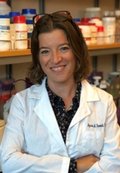
Graham Norquay, PhD
Graduated in physics from the University of Glasgow and received his PhD in MR physics from the University of Sheffield. Currently Lecturer in Magnetic Resonance Physics at the University of Sheffield. Leads a lab within the POLARIS (Pulmonary, Lung and Respiratory Imaging Sheffield) group dedicated to the hyperpolarisation of xenon gas for ongoing research and clinical applications with 129Xe MRI.
His research interests span fundamental developments in nuclear spin polarisation physics to exploring new biomedical applications of hyperpolarised 129Xe NMR.

Lotte B. Bertelsen, PhD
Graduated from Aarhus University in Molecular biology and received her PhD degree in medical research from the same university. She is currently an assistant professor at the MR Research centre, Aarhus University.
Her main focus and interests are the development of methods for the study of metabolism in cells and tissue specimens using hyperpolarized MR and biochemical methods.
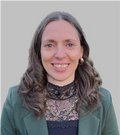
Rolf Schulte, PhD
Received his PhD in the development of methods for MR spectroscopy from ETH, Zürich. He is currently employed with GE as one of the lead developers of multinuclear MR methods.
His work focuses on the development of sequences and reconstruction methods for multi nuclear MR and, in particular, for hyperpolarized MR.
He is the developer of the Fidall package for doing multi-nuclear spectroscopy and imaging and reconstruction on GE systems.

Steffen Ringgaard, PhD
Graduated in physics from Aarhus University and received his PhD in medical research from the same university. He is currently employed as an associate professor at the MR Research Centre, Aarhus University.
His main interests focus on the development of magnetic resonance methods and analysis tools.
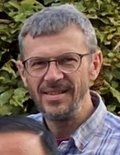
Jan Henrik Ardenkjær-Larsen, PhD
Graduated as an engineer from the Technical University of Denmark where he also received his PhD before being employed for many years as a principal scientist at GE Healthcare.
Currently he is Professor at The MR Research Centre, Aarhus University.
His research has evolved around means to improve the sensitivity of Magnetic Resonance (MR) Imaging and Spectroscopy, to obtain new, and otherwise inaccessible, information about function and disease at the cellular and molecular levels.
He is the main inventor of hyperpolarized metabolic MR and dissolution Dynamic Nuclear Polarization, and he has received a number of scientific rewards for his research. He is also the founder of the company Polarize.